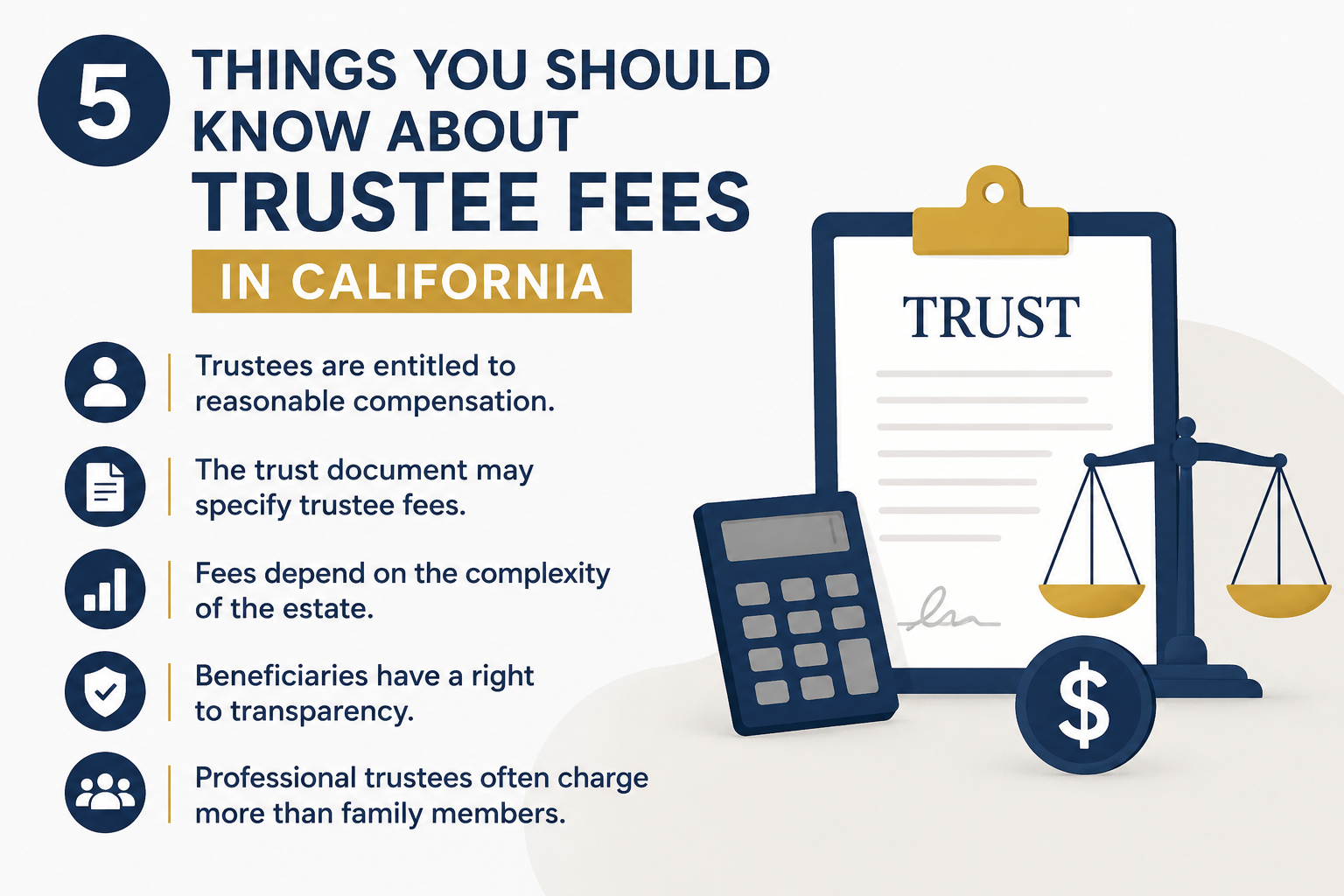

When a loved one passes away and a trust becomes active, one of the most common questions beneficiaries ask is, "How much can a trustee charge?" Understanding trustee fees is important for both trustees and beneficiaries to ensure the trust is administered fairly and in compliance with California law.
1. Trustees Are Entitled to Reasonable Compensation
Under California trust law, trustees are generally entitled to receive compensation for their services unless the trust document states otherwise. Unlike probate executor fees, trustee fees are not set by a fixed statutory schedule. Instead, compensation must be reasonable based on the work performed and responsibilities involved.
2. The Trust Document May Specify Trustee Fees
Many California trusts contain provisions outlining how a trustee should be compensated. The trust may establish a fixed fee, hourly rate, or other compensation method. If the trust document addresses trustee compensation, those terms typically govern unless they are challenged as unreasonable.
3. Trustee Fees Depend on the Complexity of the Estate
Several factors influence trustee compensation, including the value of trust assets, number of beneficiaries, management of real estate, tax filings, and the overall complexity of administration. Trusts containing investment portfolios, rental properties, or business interests often require significantly more time and expertise.
4. Beneficiaries Have a Right to Transparency
Trustees have a fiduciary duty to act in the best interests of beneficiaries. This includes maintaining accurate records and providing accountings when required. Beneficiaries may review trustee compensation and raise concerns if they believe fees are excessive or unsupported.
5. Professional Trustees Often Charge More Than Family Members
Professional fiduciaries, banks, and trust companies typically charge according to published fee schedules. Family members serving as trustees may also receive compensation, but many choose to reduce or waive fees. Regardless of who serves as trustee, compensation should reflect the duties performed and the value provided to the trust.
Final Thoughts
Trustee fees are an important part of California trust administration. Whether you are a successor trustee managing an estate or a beneficiary seeking answers, understanding how trustee compensation works can help avoid disputes and ensure the trust is administered properly. Consulting with experienced trust attorneys, fiduciaries, and real estate professionals can help protect everyone's interests throughout the process. Call Julie Sharma for any referrals