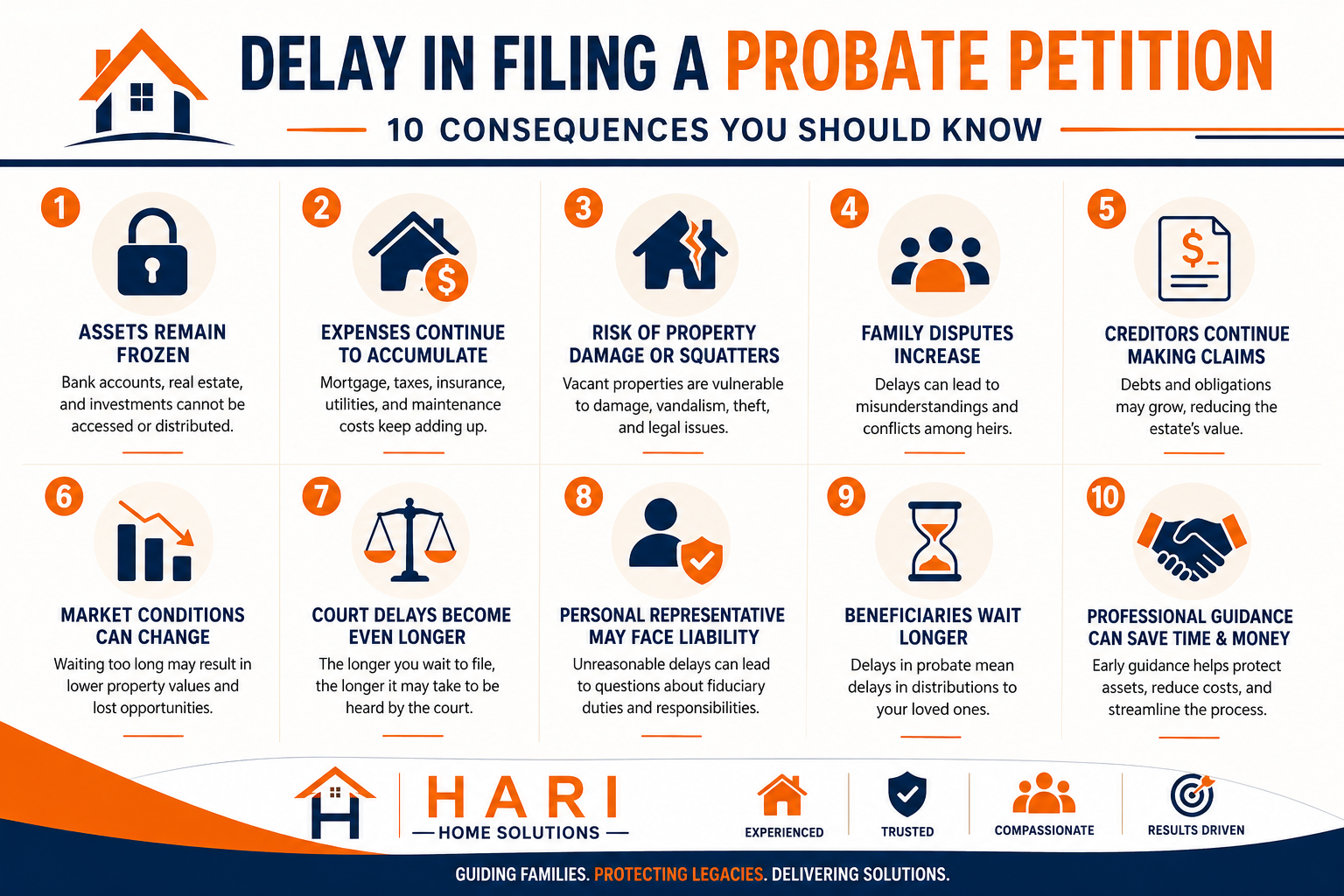

When a loved one passes away, dealing with grief is already overwhelming. Unfortunately, delaying the filing of a probate petition can create significant legal, financial, and emotional challenges for the family. Probate is the court-supervised process of transferring a deceased person's assets to their rightful beneficiaries. Waiting too long to begin the process can increase costs, delay inheritances, and even expose the executor or administrator to legal liability.
If you have recently inherited property or have been named as an executor, understanding the consequences of delaying probate can help you protect the estate and avoid unnecessary complications.
Step 1: Estate Assets Remain Frozen
Until the probate court appoints an executor or administrator, many assets cannot legally be sold, transferred, or distributed.
Possible consequences include:
- Bank accounts remain inaccessible.
- Real estate cannot usually be sold.
- Investment accounts may remain frozen.
- Beneficiaries must wait longer to receive their inheritance.
Step 2: Property Expenses Continue to Accumulate
Every month probate is delayed, the estate may continue paying expenses such as:
- Mortgage payments
- Property taxes
- Homeowners insurance
- HOA dues
- Utility bills
- Property maintenance
If no one is maintaining the property, its value may decline before it can be sold.
Step 3: Increased Risk of Property Damage or Squatters
Vacant homes are particularly vulnerable to:
- Vandalism
- Water leaks
- Deferred maintenance
- Theft
- Squatters
- City code violations
The longer a property sits unattended, the greater the financial loss to the estate.
Step 4: Family Disputes Become More Likely
Probate delays often lead to disagreements among heirs regarding:
- Who controls the property
- Distribution of assets
- Payment of expenses
- Sale of the home
- Personal belongings
The longer decisions are postponed, the more likely misunderstandings and legal disputes become.
Step 5: Creditors Continue Making Claims
Creditors may continue seeking payment for:
- Credit cards
- Medical bills
- Personal loans
- Tax obligations
Beginning probate promptly provides a structured legal process for addressing creditor claims according to California law.
Step 6: Real Estate Market Conditions Can Change
Waiting months—or even years—to file probate may result in:
- Lower property values
- Higher interest rates
- Reduced buyer demand
- Increased repair costs
- Lost opportunities to maximize the estate's value
Selling during favorable market conditions can preserve more equity for beneficiaries.
Step 7: Court Delays Become Even Longer
California probate courts can already experience significant backlogs. Delaying the filing means the estate joins the court calendar later, extending the overall timeline before the estate can be administered and closed.
Step 8: The Personal Representative May Face Liability
An executor or administrator has a fiduciary duty to act in the best interests of the estate. Unreasonable delays may expose the personal representative to questions about whether they fulfilled those responsibilities, particularly if the delay results in financial harm to the estate.
Step 9: Beneficiaries Wait Longer for Their Inheritance
One of the biggest frustrations for families is waiting to receive inherited assets. Delaying probate can postpone distributions for many months while expenses continue to reduce the estate's value.
Step 10: Professional Guidance Can Save Time and Money
Many probate delays occur simply because families are unsure where to begin. Working with experienced probate professionals early can help identify deadlines, organize required documents, protect estate assets, and prepare the property for sale when appropriate.
For more information call Julie Sharma at Hari Home Solutions at (424) 443-9898