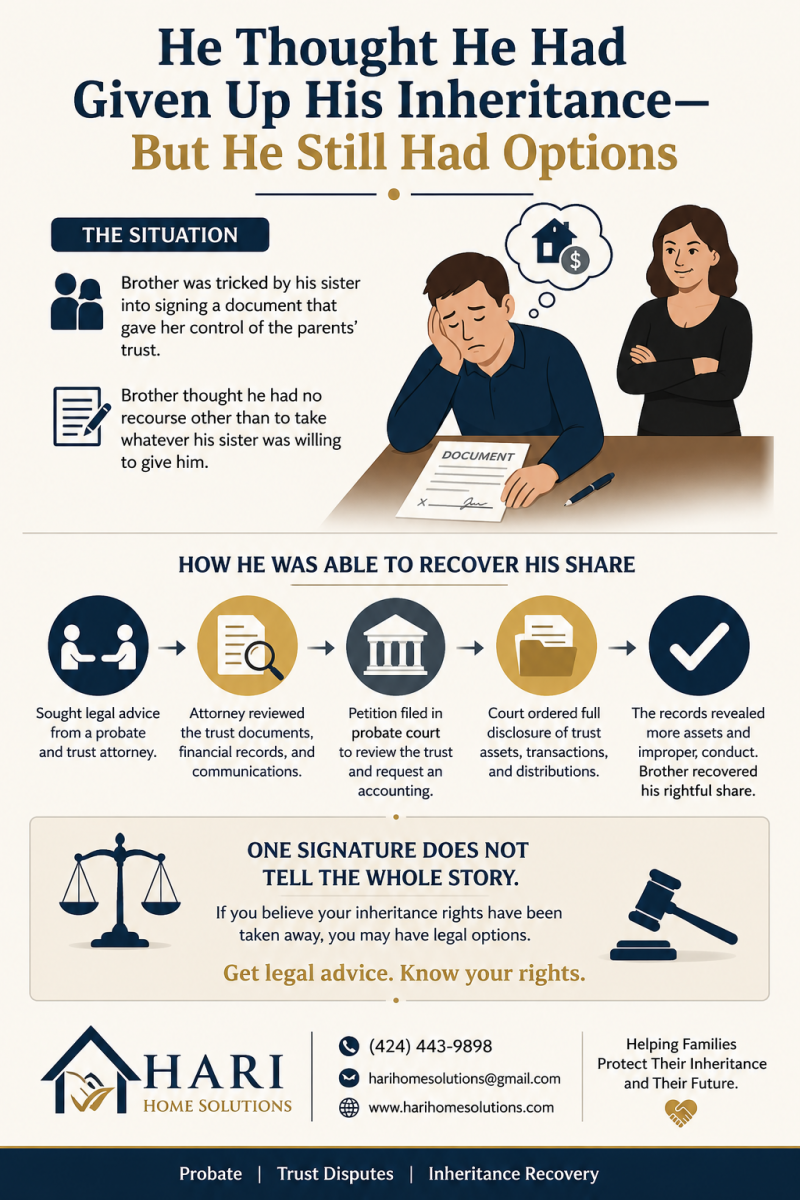

He Thought He Had Given Up His Inheritance—But He Still Had Options
When their parents passed away, a brother and sister were left to administer and divide the family inheritance.
The brother trusted his sister completely.
She told him that the paperwork she asked him to sign was simply necessary to settle their parents' estate. She assured him that everything would be handled fairly and that he would receive his share.
Believing his sister, the brother signed the document.
What he did not fully understand was that the document could significantly affect his rights to the family trust and give his sister substantial control over the assets.
Months passed.
His sister began telling him how much money was available and what she believed he should receive. The brother became concerned when the amount he was offered appeared substantially less than what he believed his parents had intended him to inherit.
He felt trapped.
He thought:
"I signed the paperwork. There is nothing I can do now."
But that assumption may not always be correct.
The Brother Decided to Get Legal Advice
Instead of accepting whatever his sister offered, the brother met with an attorney experienced in trust and probate litigation.
The attorney reviewed:
- The parents' trust
- Amendments to the trust
- The document the brother signed
- Communications between the brother and sister
- Bank and investment records
- Property records
- Trust accounting records
- The circumstances surrounding the brother's signature
- How the trust assets were managed and distributed
The attorney explained that signing a document does not necessarily end every possible legal claim. The circumstances surrounding the transaction can matter.
For example, if the brother was misled about what he was signing, lacked important information, was pressured, or the transaction involved improper conduct, an attorney may evaluate whether there are grounds to challenge the transaction or seek other remedies.
Asking the Probate Court to Review the Trust
Because the dispute involved the parents' trust, the brother's attorney considered the appropriate proceeding in probate court.
Depending on the circumstances, a beneficiary may seek court involvement concerning the administration of a trust, including issues involving the trustee, trust assets, accounting, and distribution.
The goal was not simply to accuse his sister.
The goal was to find out what actually happened to the inheritance.
The attorney requested the records necessary to determine:
What assets were in the trust?
What assets had been sold or transferred?
What expenses had been paid?
What did the trust actually require?
How much was the brother supposed to receive?
What did the brother actually receive?
The Records Changed the Picture
After reviewing the financial records, the attorney discovered that the trust contained substantially more assets than the brother had originally been told.
There were also transactions that required further explanation.
The brother now had documentation rather than simply his sister's word.
His attorney could evaluate whether to seek an accounting, challenge particular transactions, seek recovery of improperly distributed assets, or pursue other remedies available under California law.
If you believe you have been denied your rightful inheritance, getting legal advice early can be critical.
This story is a fictionalized educational example and is not a statement of the outcome in any particular case. Trust and probate law is fact-specific. This article is not legal advice. Consult a qualified California attorney regarding your individual circumstances.