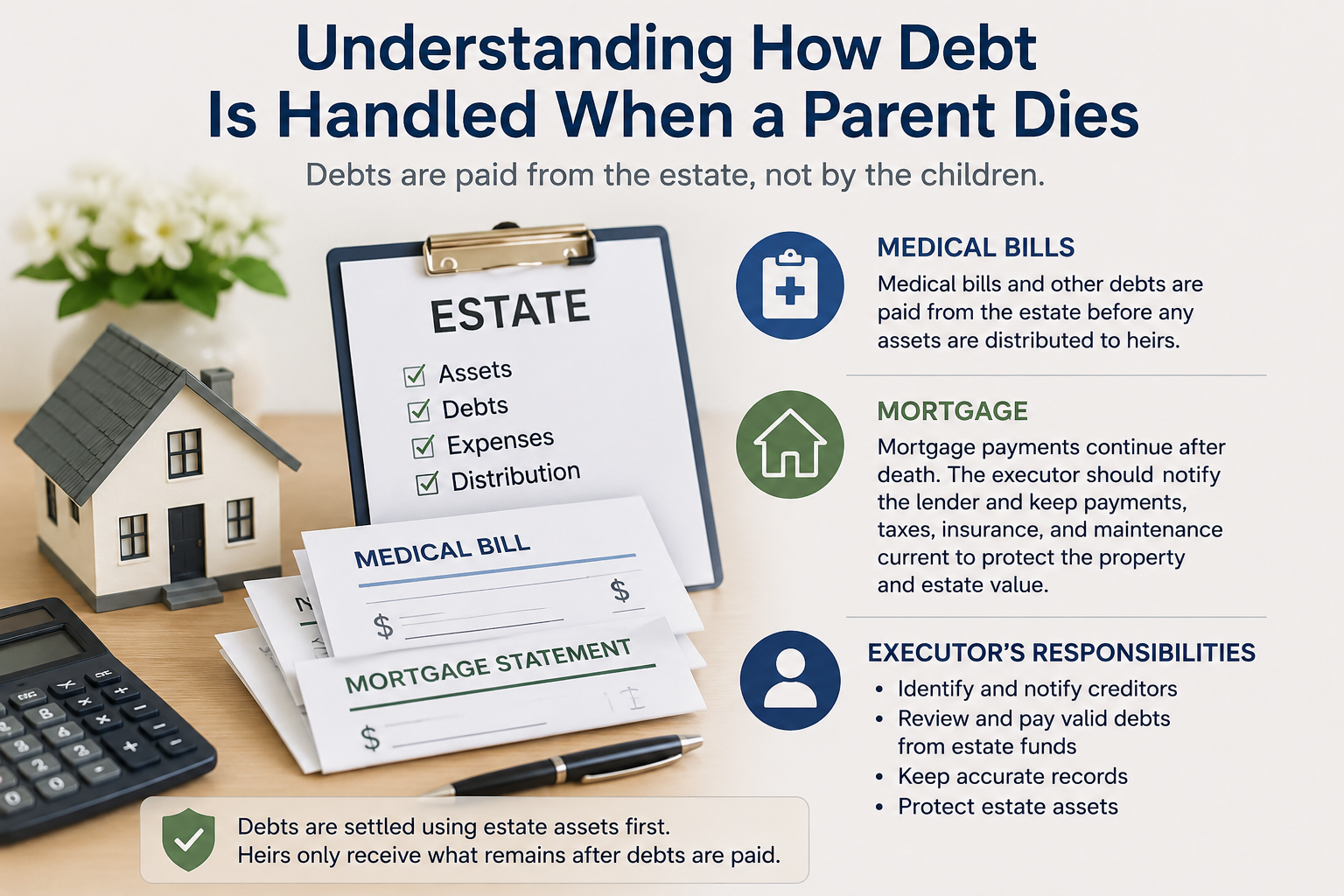

Losing a loved one is emotionally overwhelming, and managing their financial obligations can add even more stress. One of the most common questions families ask is whether they are personally responsible for a deceased parent's debts. In most cases, the answer is no.
Instead, outstanding debts—including medical bills, mortgage payments, credit cards, and personal loans—are generally paid from the deceased person's estate before any remaining assets are distributed to heirs. The executor or court-appointed administrator has a legal duty to identify creditors, notify them of the death, review all claims, and pay only valid debts using estate funds. Because medical providers may submit claims after death, executors should avoid making payments from their own money and should carefully document every expense during the probate process.
A mortgage requires special attention because monthly payments typically continue even after the homeowner passes away. The executor should immediately notify the mortgage lender, verify the loan status, and determine whether the estate has sufficient funds to keep payments current while the property is being sold or transferred to beneficiaries.
Missing mortgage payments can lead to late fees or foreclosure, reducing the value of the estate. Executors should also ensure property taxes, homeowners insurance, and essential maintenance remain current to protect the home's value. Working with an experienced probate attorney and a probate real estate professional can help families navigate these responsibilities, preserve estate assets, and avoid costly mistakes during the estate administration process. Please contact a legal professional or contact Julie Sharma a probate specialist if you need any legal referrals who can handle probate matters smoothly.