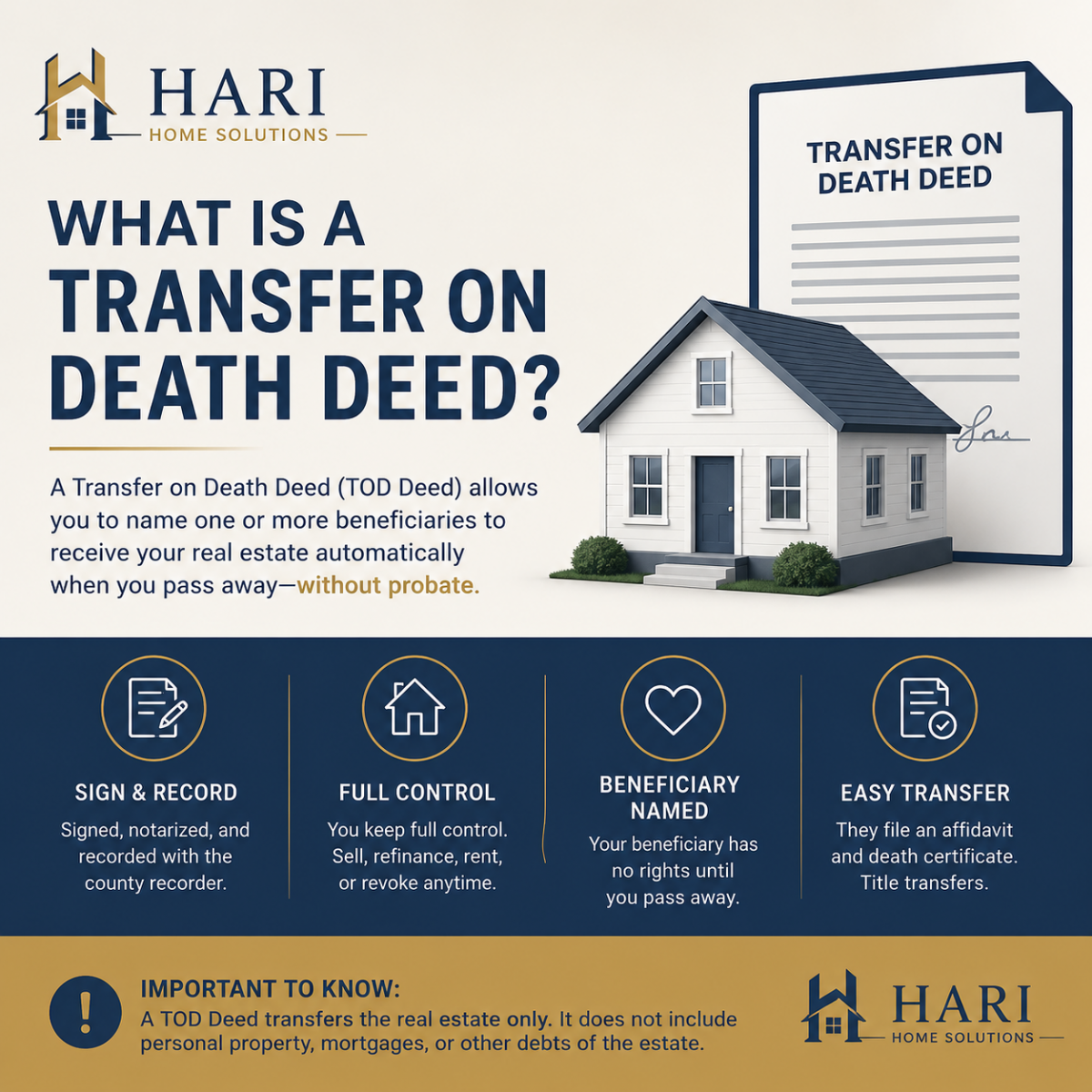

A Transfer on Death (TOD) Deed is an estate planning tool that allows a homeowner to transfer residential real estate directly to one or more named beneficiaries upon their death without going through probate. Once the deed is properly signed, notarized, and recorded with the county recorder's office, the owner retains full control of the property during their lifetime. They may continue to live in the home, sell it, refinance it, or revoke the deed at any time.
The beneficiary has no ownership rights until the owner's death. After the owner passes away, the beneficiary can complete the transfer by recording the required legal documents, making the process significantly faster and less expensive than traditional probate. For many California homeowners, a Transfer on Death Deed can be an effective way to simplify the transfer of real estate to loved ones.
While a Transfer on Death Deed helps avoid probate for the real estate itself, it does not eliminate mortgages, liens, property taxes, or other financial obligations tied to the property. It also does not transfer personal belongings inside the home or resolve other estate matters. Because every estate is unique, homeowners should carefully evaluate whether a TOD Deed aligns with their overall estate planning goals. Understanding how a California Transfer on Death Deed works can help families reduce delays, lower probate costs, and create a smoother transition of property ownership. If you are considering selling an inherited property or need guidance with probate real estate, working with an experienced real estate professional can help you understand your options and make informed decisions.Please contact Julie Sharma at Hari Home Solutions