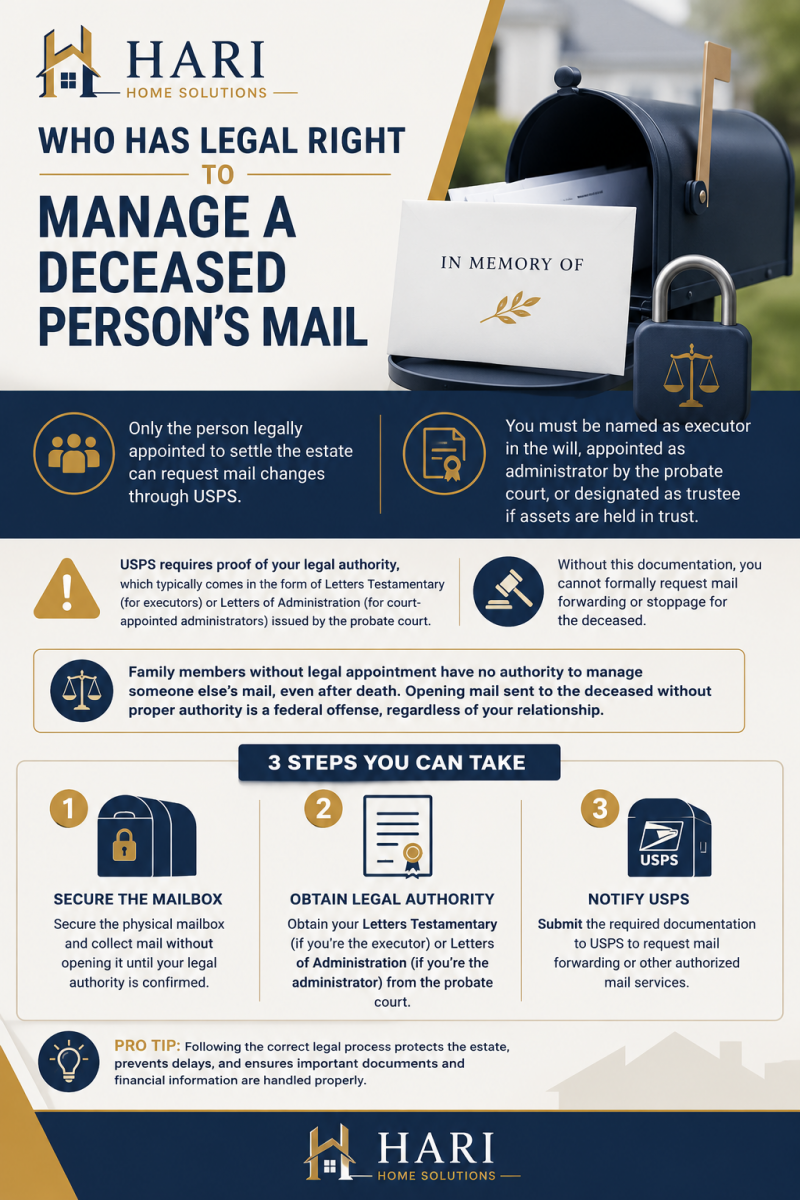

When someone passes away, only the individual who has been legally authorized to administer the estate has the right to manage the deceased person's mail. This is typically the executor named in the will, a court-appointed administrator, or the trustee if the property is held in a trust. To work with the United States Postal Service (USPS), you must provide legal documentation such as Letters Testamentary or Letters of Administration, which verify your authority to act on behalf of the estate. Without these court-issued documents, family members cannot request mail forwarding, stop mail delivery, or open correspondence addressed to the deceased. Handling a deceased person's mail without proper legal authority may violate federal law, making it essential to follow the correct probate procedures.
If you are waiting for your probate appointment, taking the right steps can help protect the estate and avoid legal complications.
Step 1: Secure the deceased person's mailbox and safely collect incoming mail without opening it.
Step 2: Obtain your court-issued Letters Testamentary or Letters of Administration, which establish your legal authority to manage the estate.
Step 3: Submit the required documentation to USPS to request mail forwarding or other authorized mail services. Understanding who has the legal right to manage a deceased person's mail is an important part of the probate process and helps ensure estate assets, financial records, and sensitive information remain protected while the estate is being settled. Finally when the probate case is closed,stop the mail completely to protect against identity theft.